Before the yeast arrives, before the hops go in, before a single decision about style or tradition is made, three things are already shaping the beer: the mineral content of the water, the genetic character of the barley, and the temperature at which that barley's starches were converted to sugar. Everything else is modification. These three are foundation.
This is not a romantic claim. It is a structural one. Water chemistry governs enzyme activity and pH across the entire mash. Barley variety — hull thickness, starch-to-protein ratio, the enzymatic potential of the grain itself — sets the ceiling on what fermentation has to work with. Heat, applied first in malting and then again in mashing, determines which of those possibilities are realized and which are foreclosed. The three are not independent variables: they act on each other, and the beer that emerges is, more than most drinkers realize, already substantially decided before the kettle boils.
The three variables — what each one actually does
- Water chemistrysets mash pH, governs enzyme activity, shapes how bitterness and fermentation acids present in the glass; never neutral
- Barley varietydetermines starch yield, protein content, enzyme load, and fermentable potential; modern varieties are recent and specialized
- Kilning heatcontrols color, destroys or preserves enzymes, generates Maillard products (melanoidins, caramels, roasted bitters); smoked before coke kilning existed
- Mash temperaturebeta amylase (cooler, drier wort) vs. alpha amylase (warmer, fuller body); sets the fermentability ceiling before yeast arrives
Water: the solvent that is never neutral
Water is often treated as the most inert of the brewing ingredients, the thing you adjust rather than the thing that acts. This is exactly backwards. Water is the medium in which every enzymatic reaction, every protein interaction, every extraction of sugar from starch takes place. Its mineral composition — principally the concentrations of calcium, magnesium, sulfate, chloride, sodium, and bicarbonate — sets the pH of the mash, modulates enzyme behavior, and shapes how bitterness compounds and fermentation acids present themselves in the final glass.
The historical record of regionally distinct beer characters tracks, with striking consistency, onto regional water profiles. The pale, bitter ales associated with Burton upon Trent in the English Midlands owe much of their sharpness to extremely high sulfate levels — naturally occurring gypsum in the underlying limestone. The soft, rounded lagers of Pilsen in Bohemia emerged from water of almost extraordinary mineral poverty; the very softness that made Pilsen an unlikely brewing center turned out to be the condition that made its delicate hop aromatics legible, where harder water would have made them angular. The dark lagers of Munich sit between those poles: moderately hard water with elevated bicarbonate that buffers pH upward, which historically favored darker, more heavily kilned malts that could push the mash pH back down.
Brewers in each of these places were not, in the early centuries, consciously manipulating their water. They were brewing with what they had and gradually learning, through accumulated failure and success, which grains and processes worked with their local source. The understanding of why came centuries later. The practice preceded the explanation by a long way.
What this means for historical brewing more broadly is significant. The same barley, handled the same way, brewed in London and in Edinburgh and in Prague, would produce meaningfully different results without anyone intending it. Regional character was partly cultural and partly mineral — a fact the revival brewing movement has sometimes acknowledged and sometimes entirely ignored.
Three water profiles worth knowing
- Burton upon Trentvery high sulfate from gypsum limestone; sharpens bitterness, suits pale ales
- Pilsenexceptionally soft, near-zero mineral content; allows delicate hop aromatics to register cleanly
- Munichmoderately hard with elevated bicarbonate; historically favored darker kilned malts to correct mash pH
Barley: what the plant brings to the table
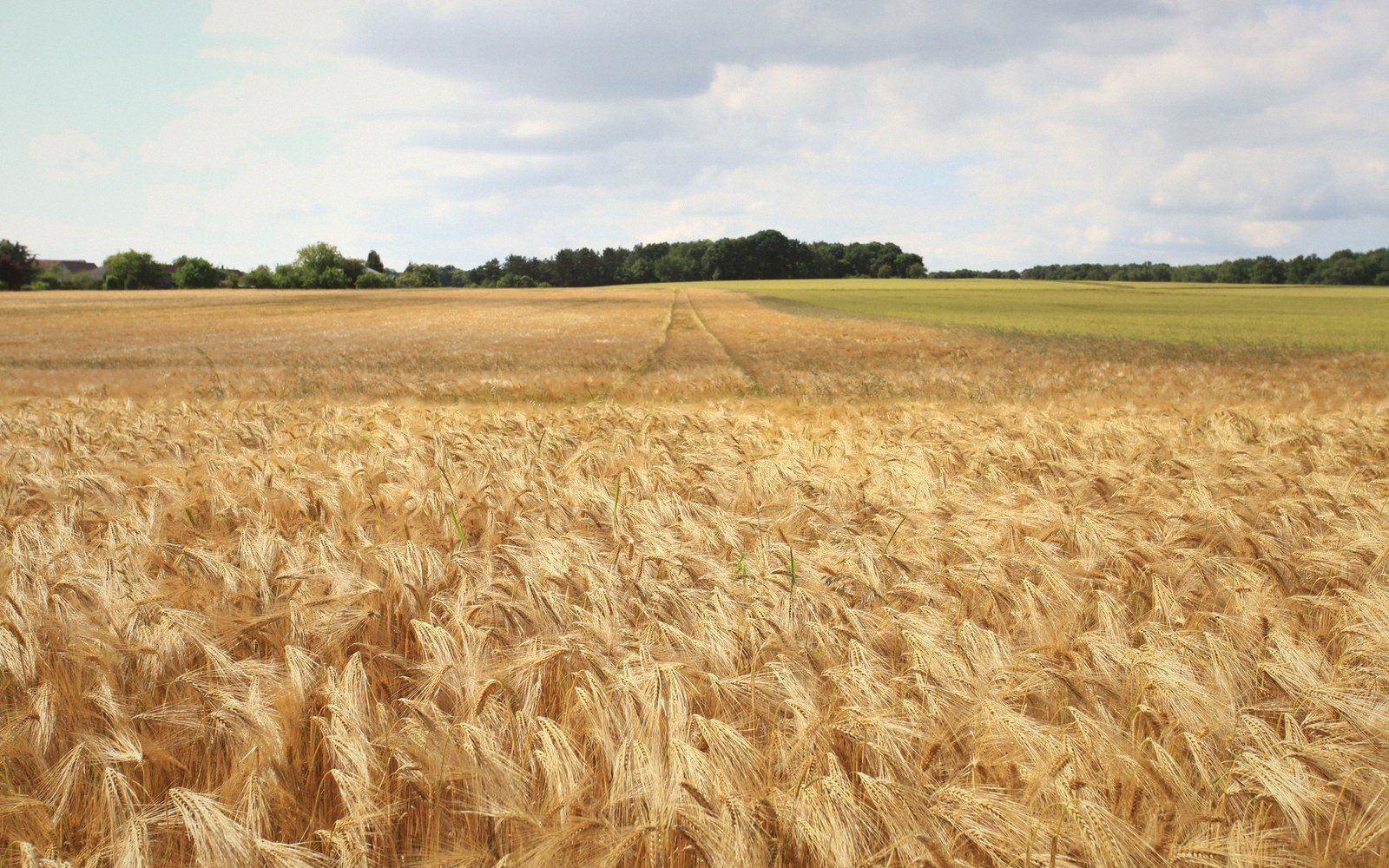
Modern brewing barley is a highly specialized agricultural product, bred across decades for a narrow set of qualities: low protein content, high starch yield, strong enzyme activity, uniform modification, thin husks. Varieties like Maris Otter in Britain or the German Pilsner malts are the result of systematic selection that would be entirely unrecognizable to a medieval maltster working with whatever landrace barley grew best in their valley.
That older barley was different in ways that mattered. Landraces — the genetically diverse, locally adapted varieties that preceded systematic plant breeding — typically carried higher protein levels, thicker husks, and more variable starch conversion rates. Higher protein content is not straightforwardly a defect: it can support fuller body, more complex Maillard reaction products during kilning, and different fermentation behavior. It also creates haze, increases the risk of stuck mashes, and complicates the brewer's life in other ways. The modern preference for low-protein barley reflects a preference for clarity, predictability, and scale. Those are not universal values.
The distinction between two-row and six-row barley is the most durable varietal difference in brewing history. Two-row barley — two rows of kernels on the seed head — tends toward larger, starchier kernels with relatively lower enzyme content per unit of starch. Six-row carries smaller kernels, more protein, and a higher enzyme-to-starch ratio. For most of European brewing history, two-row dominated. In North America, the dominance of six-row barley into the nineteenth and twentieth centuries partly explains why high-adjunct brewing — adding corn or rice to dilute protein and use up excess enzymatic capacity — became standard industrial practice. The grain drove the process.
The emmer before barley question lurks here too. For the earliest documented brewing traditions — Mesopotamia, predynastic Egypt — the grain was not barley at all, or not barley alone. Emmer wheat and hulled barleys ancestral to modern varieties were the substrate. Their starch chemistry was different, their gluten structure was different, and their enzyme profiles were different in ways that make direct comparison to modern styles essentially meaningless. Sahti, the Finnish farmhouse ale that persists to this day, still uses a proportion of rye alongside barley, producing a complexity of fermentable sugars and a characteristic viscosity that all-barley mashes simply do not replicate. The grain is not a neutral platform.
Fire: the hinge between raw grain and fermentable substance
Heat appears twice in the grain's journey, and both appearances are transformative. The first is malting: controlled germination followed by kilning. The second is mashing: steeping the crushed malt in hot water to allow enzymes to convert starch to sugar.
Malting is the creation of enzymatic potential. When barley germinates, it produces amylase enzymes designed to convert its own starch reserves into sugars to feed the growing seedling. The maltster's art is to encourage that enzymatic development — through careful wetting and germination — and then arrest it with heat before the seedling consumes the sugars it has made available. The temperature of that arresting kiln fire is not incidental to flavor: it is the primary determinant of malt color and a major driver of malt character. Low-temperature kilning preserves enzyme activity and produces pale, relatively neutral malt. High temperatures destroy enzymes and generate Maillard reaction products — the melanoidins, caramels, and roasted compounds responsible for color, sweetness, biscuit, toast, and the dark bitterness of heavily roasted grains.
For most of brewing history, indirect kilning over controlled heat sources did not exist. Malt was dried over open fires, and smoke was not an optional note — it was a structural feature of the beer. The open-fire kiln, and the smoked malt it produced, gave way eventually to coke-fired indirect kilning, which made pale malt possible for the first time in the early eighteenth century. Pale ale and, later, pilsner lager are technologies of fuel as much as grain.
Mashing temperature operates on a shorter timescale but is no less consequential. Starch gelatinizes — becomes available to enzymatic attack — at different temperatures depending on the grain. The two principal amylase enzymes in malt, alpha and beta amylase, have different temperature optima. Beta amylase, which produces fermentable maltose, is active at lower temperatures and denatures before alpha amylase does. Mashing on the cooler end of the usable range produces a drier, more fermentable wort. Mashing warmer favors alpha amylase, which creates longer, less-fermentable dextrins and a fuller body. The difference between a thin dry lager and a full sweet stout begins in the mash temperature, not in any later addition.
Why this matters before anything else is added
Every subsequent step in brewing — fermentation character, hop bitterness, adjuncts, aging — operates on the platform that water, barley, and heat have already constructed. You cannot hop your way out of a poorly mineralized water profile. You cannot ferment complexity into a mash that enzymatic mismanagement has already simplified to fermentable sugar and little else. You cannot conjure body from grain that was never going to provide it.
The historical traditions that survive with the most distinctive, most place-specific character — the lambic beers of the Zenne valley, Finnish sahti, the great pale ales of Burton — are all cases where something in the water-barley-heat triad was constrained, unusual, or locally specific in a way that forced everything downstream to adapt to it. The constraint produced the character. The three variables that brewers now routinely adjust, correct, and optimize were for most of history simply given — and the beer was a response to them, not a product placed above them.