The Default You Stop Noticing
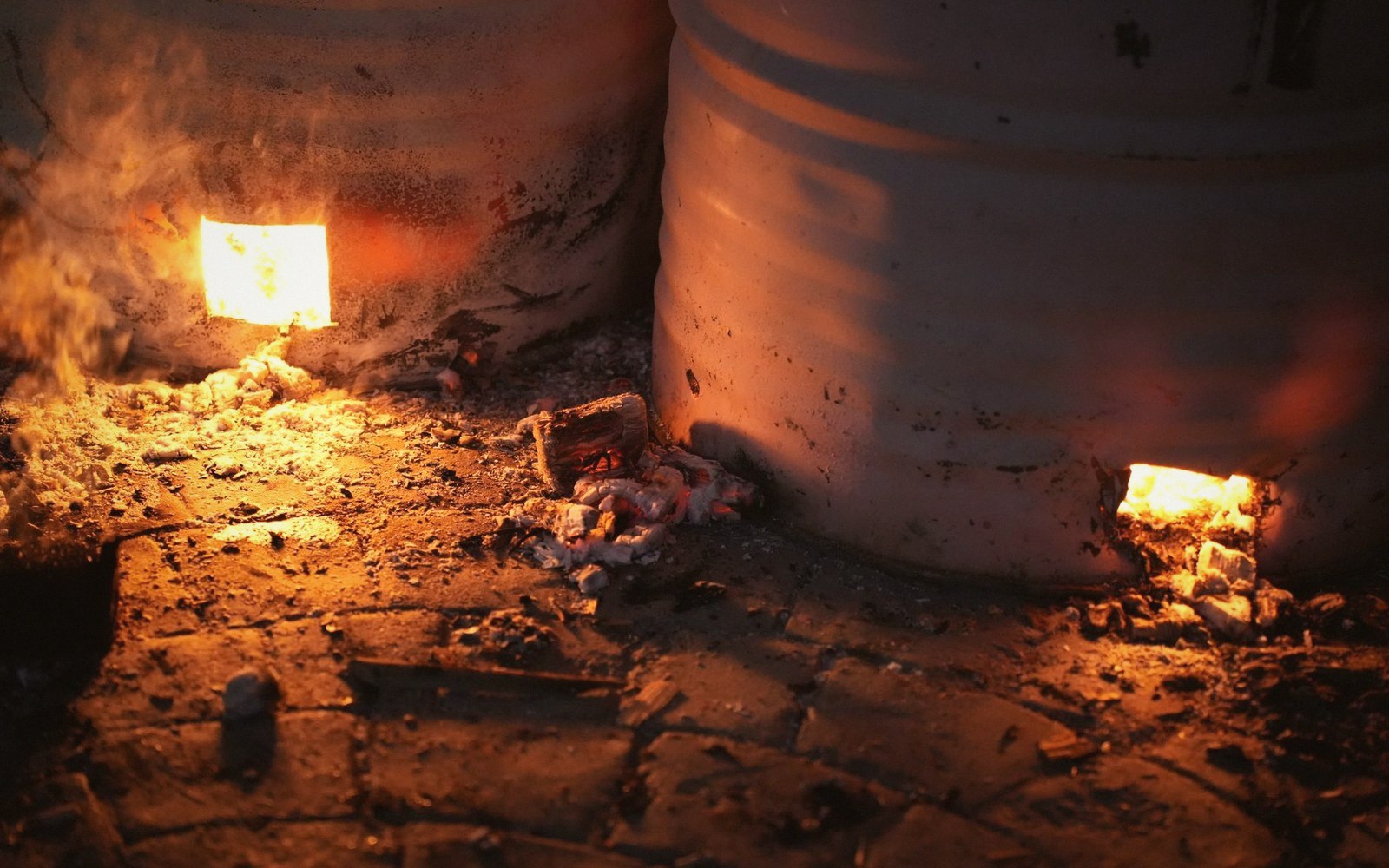
Malt needs heat to stop germination and drive off moisture. For most of brewing history, that heat came from direct-fired kilns — peat, wood, straw, whatever fuel was local and cheap. The smoke passed straight through the grain bed. There was no other path for it to go.
This is not a minor detail about historical beer character. It means that virtually every ale or beer brewed in Europe before the late eighteenth century carried smoke as a baseline note — not a specialty addition, not a stylistic statement, but the inescapable texture of the main ingredient. When we read medieval or early modern accounts of beer and try to imagine the flavour, we are almost certainly imagining something too clean.
Indirect kilning — routing combustion gases away from the grain so only hot air contacts it — became technically reliable in England in the early nineteenth century, and it spread gradually and unevenly. The pale malt that made Burton pale ales and eventually the pale lager base malt of the industrial era is a product of that engineering shift. The clean, biscuity, neutral cereal character we now treat as the norm is, historically speaking, the novelty.
What happened, in order
- Pre-19th centuryvirtually all European malt kiln-dried over direct fire; smoke is universal
- Early 19th centuryindirect kilning becomes technically reliable in England; pale, smoke-free malt becomes achievable at scale
- Gradual spreadtransition uneven across regions; some traditions never fully adopt indirect kilning
Traditions where smoke remains the default
- Bamberg, Franconiarauchbier (smoked beer) produced over beechwood-smoked malt; not a revival, a continuation
- Scottish peated maltoriginally for whisky distilling; harder, more phenolic character than beechwood
- Finnish sahtihistorically alder- or birch-smoked malt; smoke structurally present, not decorative
Where the Smoke Stayed
A few traditions never made the switch, or made it only partially, and those places are where smoked malt remains the default rather than a theatrical garnish.
Bamberg, in Franconia, is the clearest case. Rauchbier — smoked beer, lager-fermented and made from beechwood-smoked malt — is not a revival or a craft experiment there; it is the local industrial product of specific malthouses that simply continued an older method. The smoke in a Schlenkerla Märzen is not added for effect. It is what the malt tastes like.
Scotland's whisky tradition preserved peated malt for distilling purposes, and a handful of Scottish brewers have drawn on that supply to make ales where the smoke is Highland peat rather than continental wood. The character is harsher, more medicinal — iodine and ash where beechwood gives bacon and meat.
In rural Finland, the sahti tradition dried malt over alder or birch fires well into the twentieth century. The smoke in older sahti was structural, not decorative.
What the historical record cannot give us is the precise intensity — how much smoke a medieval brewer's customer noticed, or stopped noticing, because it was everywhere. Acclimatisation flattens perception. The smoke was simply what malt smelled like, and beer tasted like, and that was the whole world of grain.