The Roof Opens in October
Lambic is made in the Senne valley of the Brussels region during a specific window: roughly October through April. Outside those months, the air carries too many competing microorganisms, and the fermentation goes wrong in predictable, unpleasant ways. This is not romanticism. It is a hard constraint that has shaped the tradition's calendar for centuries and that limits production in ways no other major beer style accepts.
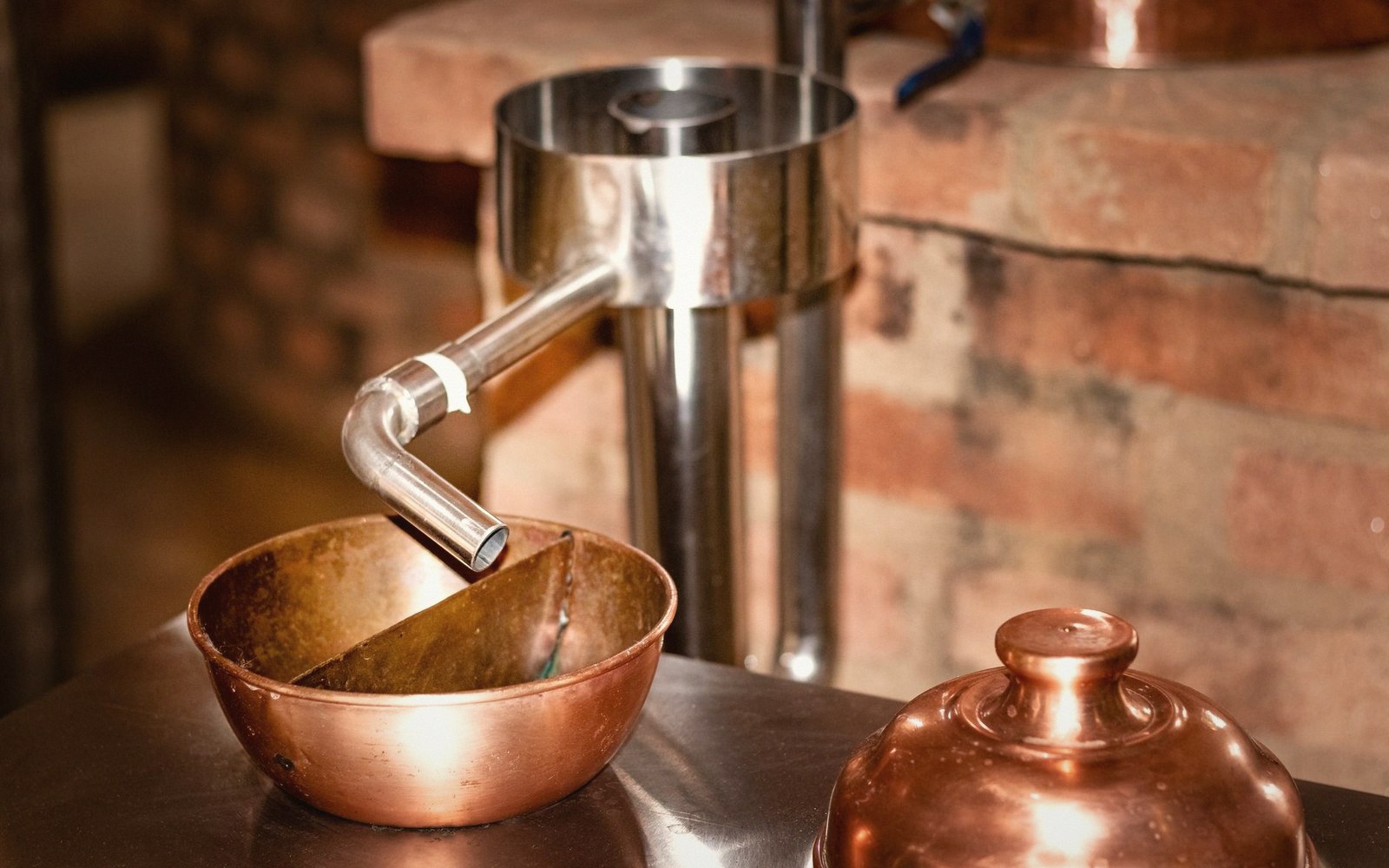
The mechanism is the coolship — a shallow, wide, open metal pan, typically copper or stainless steel, installed beneath a vented roof with louvred openings that draw in night air. Hot wort is pumped into the coolship after the boil and left to cool overnight. During those hours, ambient microorganisms from the surrounding environment — airborne wild yeasts, bacteria, spores carried in on the breeze — inoculate the liquid. Nothing is pitched. No cultivated yeast is added at any stage. The fermentation that results is genuinely spontaneous in the technical sense: it begins with whatever lands in the pan.
But "spontaneous" can mislead. The actual fermentation is not random. Every lambic brewery accumulates, over decades, a resident microbial population in its wooden casks, its walls, its pipework, and its timbers. The organisms that matter most — the Enterobacteriaceae that drive the early turbid phase, the Saccharomyces strains that drive the main alcoholic fermentation, then the pediococci responsible for a later lactic souring, and finally Brettanomyces bruxellensis — succeed each other in a roughly predictable ecological sequence. The open roof admits new inoculum each season, but the brewery itself shapes and stabilises the culture over time. A lambic from a recently established producer and one from a house with a century of continuous production will ferment differently, and the difference is architectural and microbial as much as technical.
The ecological sequence
- Enterobacteriaceaebacteria active in the first turbid weeks; produce off-flavours that later organisms consume or suppress
- Saccharomyces strainsdrive the main alcoholic fermentation after the early bacterial phase
- Pediococci lactic acid bacteria; responsible forthe later lactic souring that defines lambic's sourness
- Brettanomyces bruxellensis the late-phase wild yeast most identified with lambic'sdry, complex, leathery character
The protected designations
- LambicBelgian geographic indication; requires spontaneous fermentation, unmalted wheat, aged hops, oak aging; Senne valley and Brussels only
- Gueuzeblend of lambics of different ages, refermented in bottle; protected separately
- Oude gueuzetraditional designation overseen by HORAL, excluding pasteurised or sweetened products
- HORALHigh Council for Artisanal Lambic Beers; Flemish acronym; issues the mark distinguishing traditional producers
What the Designation Actually Covers
Lambic is protected under Belgian law and, within the European Union, under a geographical indication. The production zone is defined: the Pajottenland region southwest of Brussels, and the city of Brussels itself. The definition requires spontaneous fermentation, a mash that includes a substantial proportion of unmalted wheat — conventionally around thirty percent — and extended aging in oak casks. The hop character comes from aged hops, deliberately stale, used for their preservative tannins rather than bitterness; lambic is not a bitter beer by design.
What the designation does not cover is almost as important. Gueuze — the blended and re-fermented version made from lambic of different ages, the result carbonated by the blend's residual sugars — is protected separately, and "oude gueuze" (old gueuze) carries its own mark through the High Council for Artisanal Lambic Beers, known by its Flemish acronym HORAL. Fruit lambics, made by steeping whole fruit — traditionally cherries for kriek, raspberries for framboise — in maturing lambic, are similarly distinguished between industrial versions sweetened with concentrates and traditional versions using whole fruit and relying on the fruit's own sugars to drive a secondary fermentation. These distinctions matter because the supermarket shelf carries products labelled with all these names that bear only a family resemblance to the tradition they invoke.
The HORAL mark, and the separate Certified Authentic Lambic designation pursued by a coalition of traditional producers, attempt to draw these lines in commercially legible ways. They are imperfect instruments, subject to the usual tensions between heritage producers and larger operators with the means to lobby. But they are more than cosmetic: a bottle carrying the mark of a traditional producer in Beersel or Lembeek represents a fundamentally different process from a pasteurised, sweetened product in a mass-market can, whatever the shared label vocabulary.
The production window
- October to April: the only months when ambient temperatures and microbial conditions are suited to coolship inoculation
- Summer production is not a matter of preference;it is understood within the tradition as simply not viable
Slow by Structure, Not by Style
The minimum aging before a lambic can be blended into gueuze is around one year in oak. Serious producers blend lambics of one, two, and three years, and the three-year component provides the structural depth, while the younger lambic supplies the fermentable material that drives refermentation in bottle. The total time from open roof to finished carbonated gueuze can easily exceed three years. No shortcut exists within the traditional method, because the ecological succession in the cask cannot be meaningfully accelerated — the pediococci that sour the beer work at their own pace, and the Brettanomyces that provide the characteristic dry, leathery, complex finish need years in wood to express fully.
This is what makes lambic something genuinely apart from the broader world of wild and spontaneously fermented beers: not that it is older or more authentic in some vague sense, but that spontaneous fermentation keeps returning to serious brewing precisely because the method is non-negotiable. The season dictates the start. The microbiome dictates the pace. The blender decides when it is ready. The open roof is not a metaphor. It is the first ingredient.